24 July, 2026
Animal Health and Tick Control Sessions
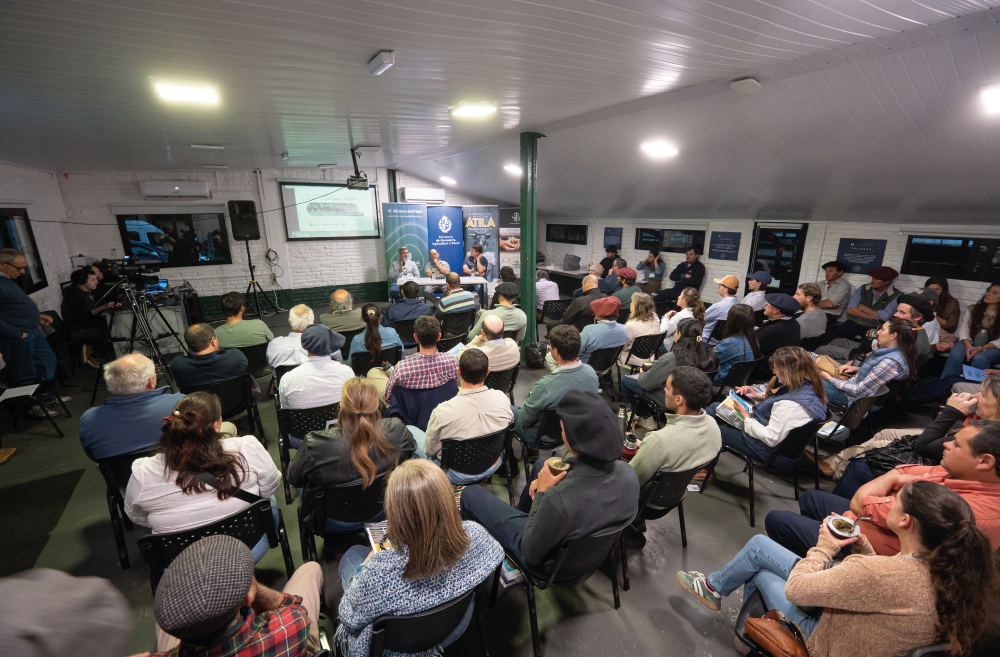
During July we held three sessions on animal health and tick control in Young, La Paloma, and Batlle y Ordóñez, with the participation of more than 180 people.
These sessions are part of a line of work we have been carrying out together with the Ministry of Livestock, Agriculture and Fisheries for more than ten years. This edition once again featured Laboratorio Microsules, contributing technical knowledge about available products and their correct application.
The activities were aimed at producers, cattle herders, and the general public, with the objective of providing knowledge and tools to strengthen prevention, treatment, and health management on livestock farms and forestry properties with livestock activity.
The first session took place on Thursday, July 16 at the Young Agricultural Training Center. The activity was held in both in-person and virtual formats, with a live stream through our official YouTube channel. The event can be viewed at the following link: https://www.youtube.com/watch?v=7POzpngmMqc.
The following sessions were held on Wednesday, July 22 at Club Social La Paloma and on Thursday, July 23 at the Casa Museo Wilson Ferreira Aldunate in Batlle y Ordóñez.
During the events, agronomist Martín Rodríguez presented the forestry and livestock integration model we apply on our properties. Thousands of our hectares are used by producers for grazing, which requires coordination between the company, the producers, and the health authorities.
"At Montes del Plata, we support animal health on the properties with infrastructure, technical training, and an annual veterinary assessment, which provides additional information and guarantees to the system. The health treatment for each herd is defined by the producer together with their veterinarian," said Rodríguez.
Each year we hire a veterinarian who visits our properties to assess animal health and review livestock infrastructure. When areas for improvement are identified, we agree on a health plan with the producer. This work is complemented by annual investments of over US$ 250,000 in cattle handling facilities and close to US$ 1 million in perimeter and internal fencing.
Fencing plays an important role in prevention, as it reduces the risk of animals entering from other properties and the possible introduction of ticks into herds grazing within our forestry properties.
Dr. Carlos Fuellis, from the Ministry of Livestock, Agriculture and Fisheries, presented on tick biology, available treatments, responsibilities related to tick management, and the prevention of veterinary product residues in meat.
Dr. Gonzalo Simone, from Laboratorio Microsules, presented the Rapid Resistance Test, a tool that makes it possible to evaluate the effectiveness of the active ingredients used to control the parasite and guide the definition of treatments.
The presentations also addressed the particularities of tick control in forested fields. In that context, the specialists stressed the importance of treating the entire herd and ensuring that animals enter new fields free of ticks.
We promote these sessions as part of our commitment to the coexistence of forestry and livestock production, through training, technical support, and investment in infrastructure.
