18 August, 2026
Uruguay, Land of Giants: New Space at Bioparque M'Bopicuá
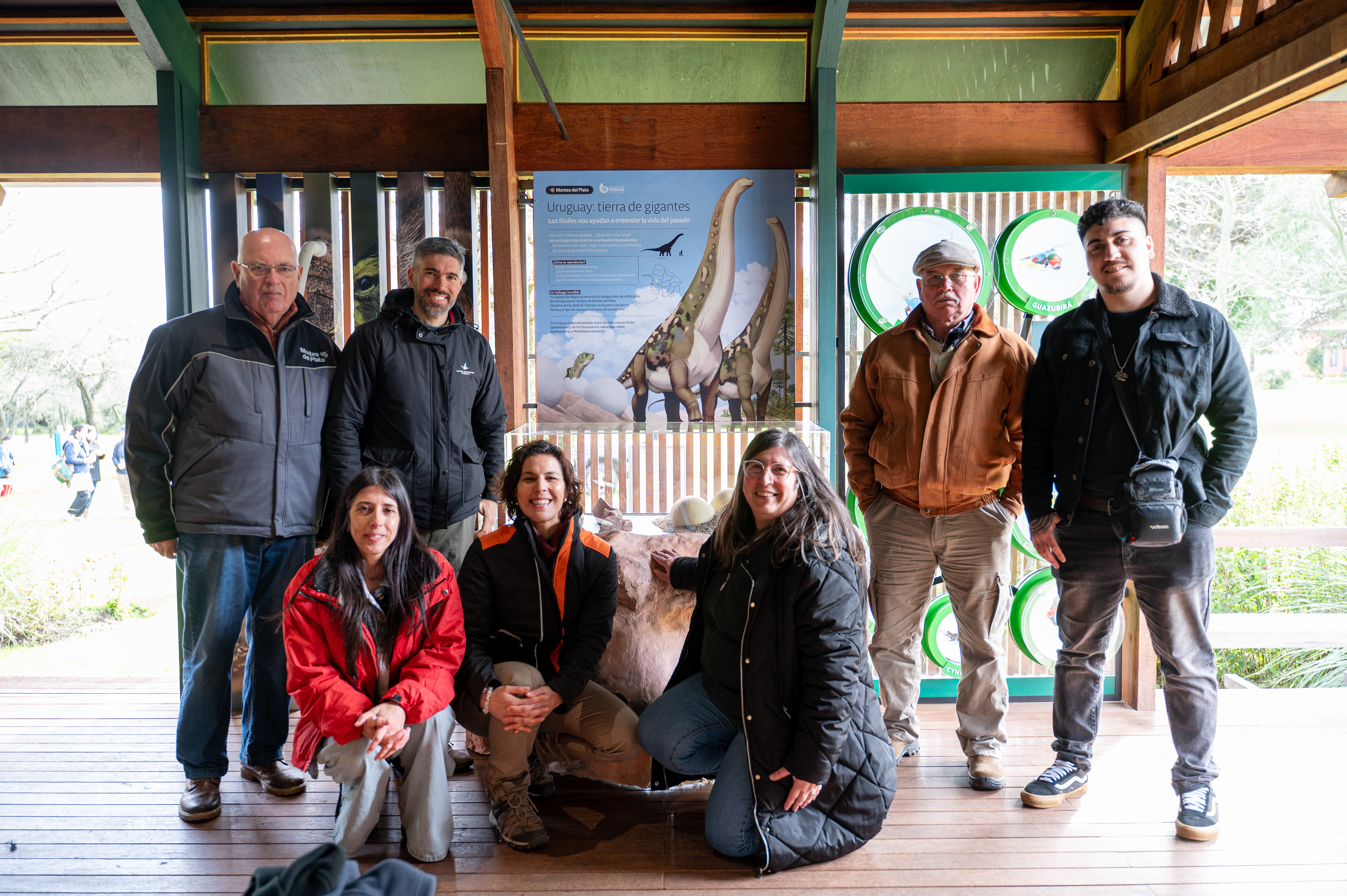
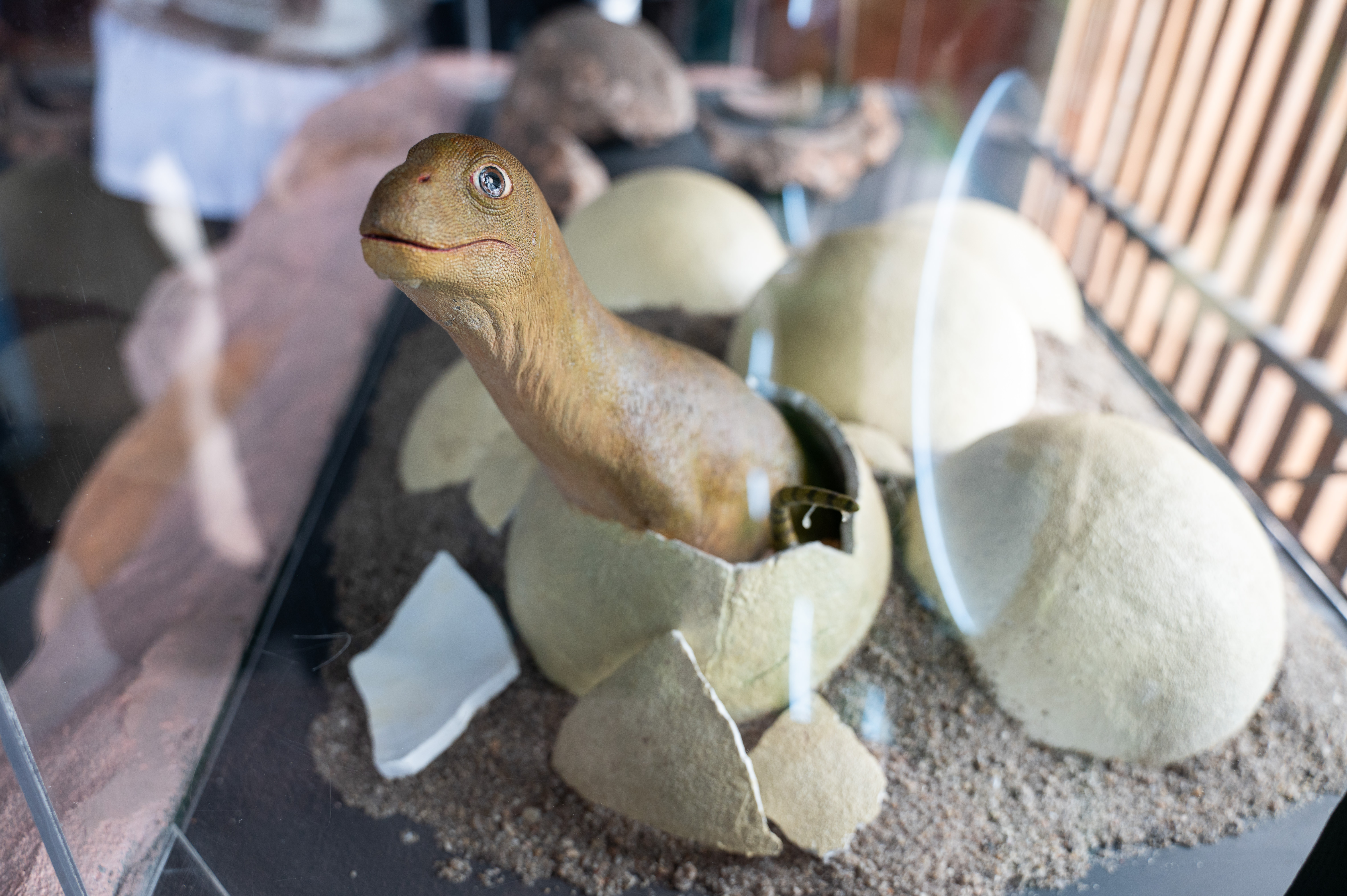
Titanosaur fossil eggs 80 million years old, found on a Montes del Plata property and studied by the Faculty of Sciences, are now on display in the Bioparque's new space.
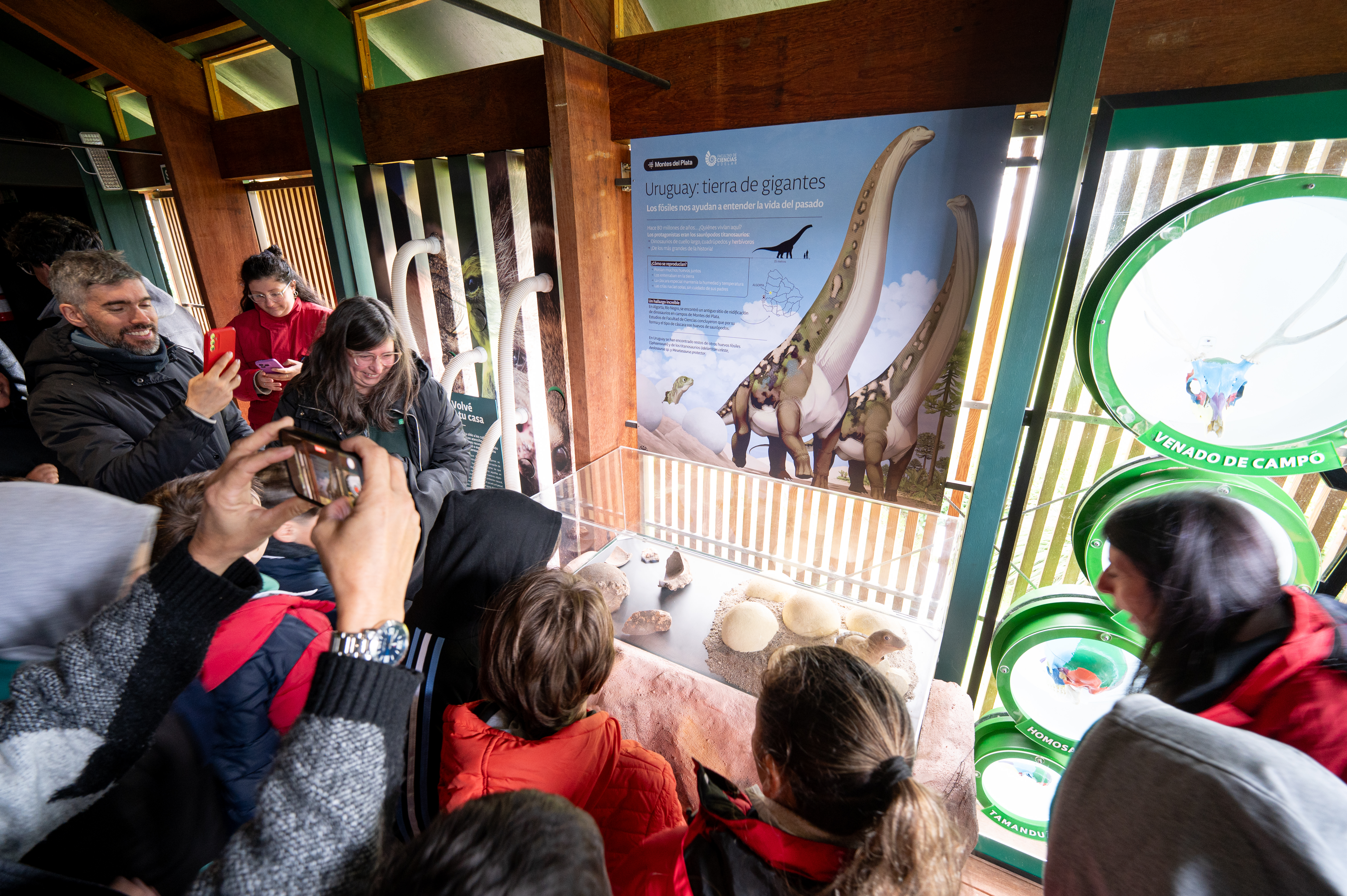
Together with the Faculty of Sciences of the University of the Republic (Udelar), we inaugurated "Uruguay, Land of Giants", a new space in the Visitor Center of Bioparque M'Bopicuá, where we display dinosaur fossil eggs found on one of our forestry properties.
The discovery took place in 2013, when Sergio Leguizamón, who was herding cattle on a Montes del Plata property, found an unusual formation beneath the roots of a tree knocked down by a storm. It was a fossil egg. Following our environmental and heritage conservation protocols, we notified the National Museum of Natural History and the Faculty of Sciences, which initiated a paleontological survey of the area.
The fieldwork allowed the recovery of additional fossil eggshell fragments in good condition, identified as belonging to titanosaurs, large herbivorous dinosaurs from the Late Cretaceous that inhabited the region approximately 80 million years ago. The findings led to a broader laboratory study, funded by ANII, whose results we now share through this new space.
Representatives from the Faculty of Sciences, the Intendancy of Río Negro, and School No. 23 of Algorta — a town neighboring the property where the discovery was made — attended the inauguration. Sergio Leguizamón, who made the discovery, also joined us.
During the event, paleontologists and geologists Valeria Mesa and Matías Soto, faculty members at the Udelar Faculty of Sciences, gave a talk about the dinosaurs that inhabited our territory 80 million years ago. They explained that the eggs belong to titanosaur sauropods: quadrupedal, long-necked, herbivorous animals that buried their eggs in a communal site. The shell maintained the humidity and temperature necessary for incubation, and the hatchlings were born without parental care.
"It is a great joy for us to inaugurate this new space at the Bioparque alongside the Faculty of Sciences, where we welcome more than 6,500 visitors each year. Through this space, we will be able to bring the history of those who inhabited our country millions of years ago closer to the schools, institutions, and families that visit us, and help spread awareness of the value of our paleontological heritage," said Marina Flores, Sustainability Manager at Montes del Plata.
She added: "At Montes del Plata, our procedures ensure the proper conservation not only of this type of find, but also of other sites of high heritage and environmental value, such as rock paintings and areas of special importance for biodiversity. Preserving these public assets is a concrete contribution to the knowledge, culture, and heritage of society as a whole."